The Lioness Archive
A collection of human analysis,real-world insight, and protective thinking focused on prevention, and human behavior.

BLOGS
-
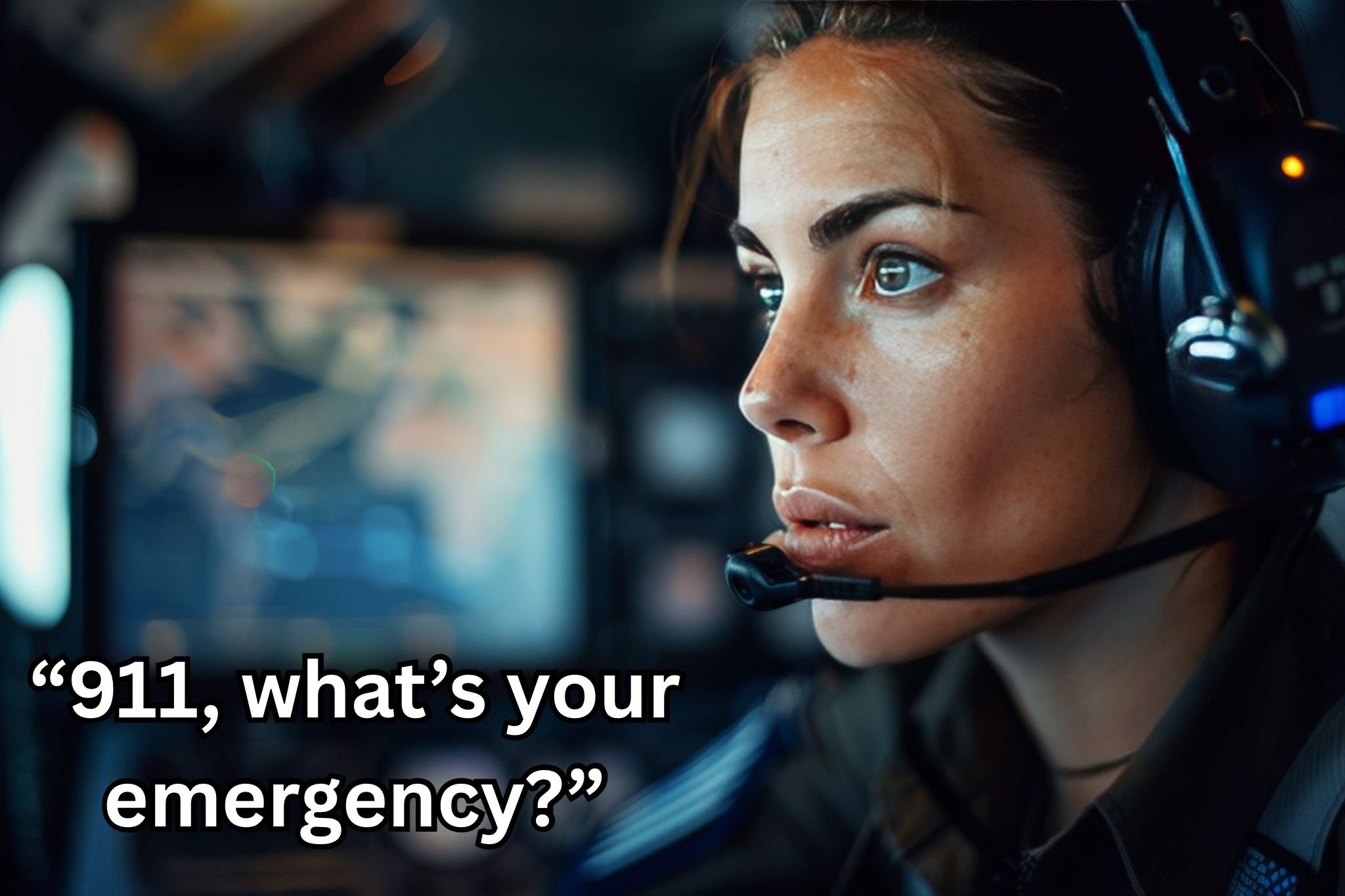
It is a phrase we have all heard on TV or in real life.
But here is what most people do not realize. When you call, dispatch does not automatically know where you are. Unless you are on a landline or a system with enhanced location services, the operator might only get a rough estimate or nothing at all. That is why situational awareness is not just a security buzzword. In an emergency, it is survival.
Being able to quickly say where you are, whether that is cross streets, mile markers, landmarks, or the name of the business you are inside, can shave minutes off the time it takes for help to actually reach you. Minutes that matter when you are bleeding, when someone is not breathing, or when a threat is unfolding.
The next time you go somewhere, take a moment to register where you are. Because in an emergency, the first detail that matters is not what happened. It is your location! When minutes count and seconds decide outcomes, that is the detail that brings help to your side.
Keep learning. Keep training. Stay safe.

-
Executive Protection Agent: “I don’t care if it’s an unarmed assignment. I’m still carrying my firearm.”
That statement tends to surface the moment a detail is defined as unarmed. The assignment is questioned, pushback follows, and justification begins for why the firearm should still be present.
From there, the workaround begins. The firearm shows up anyway, despite clear direction and established constraints. That justification is often tied to credentials such as HR 218, which do not grant authority within the conditions of the assignment.
What becomes visible in that moment is not preference. It is how the agent understands executive protection. The role is being defined through response and control, rather than through prevention, and that shows up immediately in that pushback and justification.
When the firearm is removed, the conditions of the assignment do not change. What changes is the loss of a single tool, and that is what exposes how the agent defines control. For agents anchored to response, the assignment begins to feel incomplete and uncomfortable without it, even though nothing about the assignment itself has changed.
On the other side of that, the reaction looks different. When the assignment is accepted as unarmed, the work continues without disruption.
Movement, positioning, access control, and behavioral awareness remain the focus because those elements do not change with or without a firearm. The method holds because it was never built around that tool. That approach reflects an understanding of executive protection beyond response.
Ignoring the conditions of an unarmed assignment and carrying a firearm does not stay with the agent. It affects the client, the company, and the people responsible for placing that agent in the role.
In corporate environments, there is no room for negotiation. Those conditions are contractual, legal, and operational. When they are ignored, the client moves on, and the contract is lost.
All because the agent chose the firearm over the assignment, believing the rules did not apply to them.
Keep learning. Keep training. Stay safe.
-
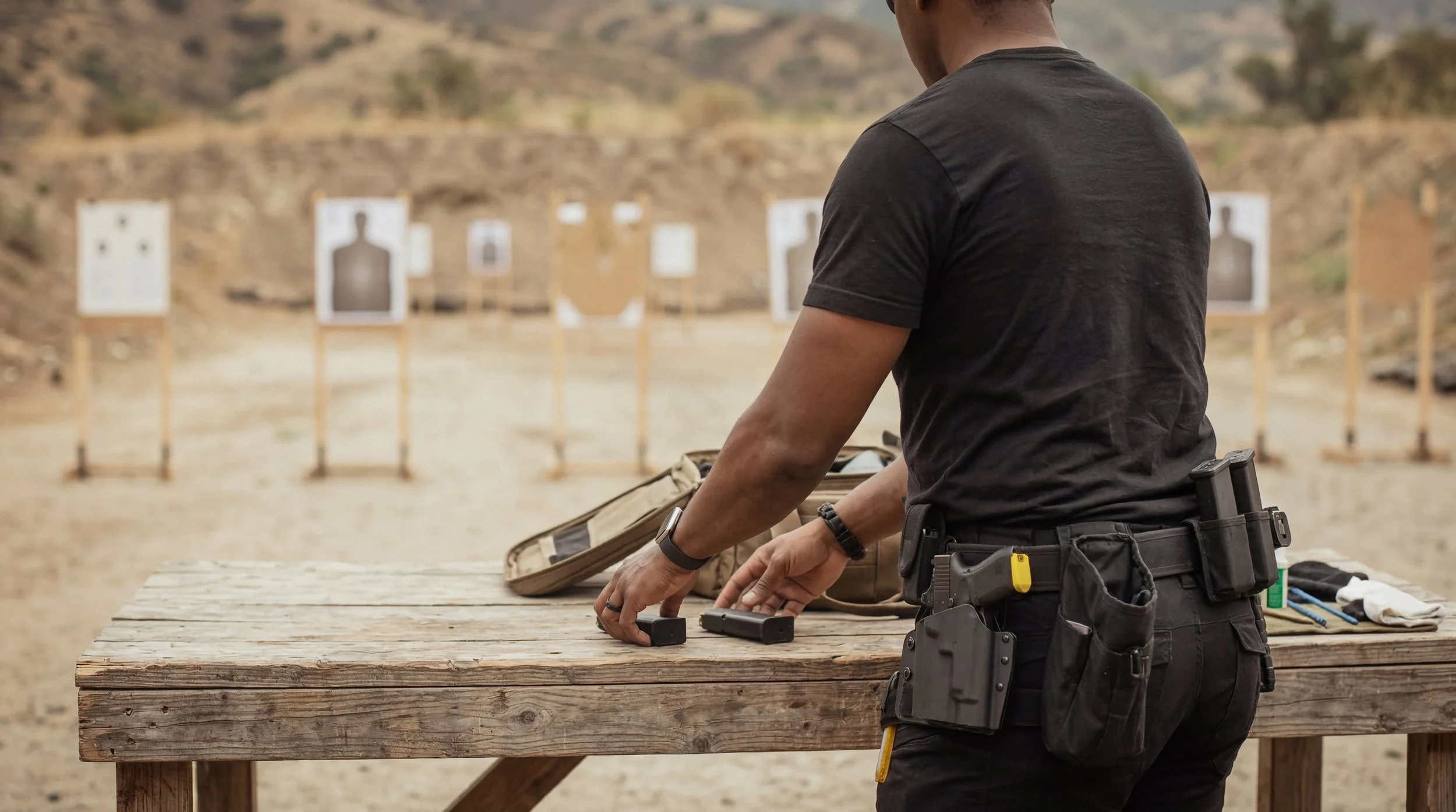
If the firearm is going to be treated as the primary solution, the training behind it cannot be an afterthought.
That becomes a problem when the firearm is expected to function under conditions that are rarely replicated in training. Real encounters do not unfold in static lanes, controlled timing, or predictable sequences.
They require decision-making under pressure, target discrimination, movement, communication, and the ability to manage physiological stress responses such as elevated heart rate and perceptual narrowing. These are not secondary skills. They are the conditions under which the firearm is expected to function.
When training is infrequent or narrowly scoped, confidence does not disappear. It stabilizes around an incomplete picture of capability.
The presence of the firearm can create a sense of control, but the ability to deploy it under rapidly changing conditions depends on more than mechanical proficiency. It requires the capacity to interpret environmental variables and make legally and tactically sound decisions within compressed timeframes.
Without that integration of skill, judgment, and repetition, the firearm does not solve the problem. It changes how the problem is perceived.
That perception carries forward into the aftermath. The use of a firearm introduces legal and ethical consequences that extend beyond the moment of engagement.
Decisions must align with use-of-force standards, proportionality, and post-incident scrutiny. Training does not only determine how force is applied. It determines whether that decision can be justified afterward.
A trained operator does not organize their strategy around the firearm. It is placed within a framework that prioritizes avoidance, recognition, and control before escalation.
The firearm remains a critical tool, but it is not the foundation of the strategy. It sits within a system built to reduce exposure and manage risk before force becomes necessary.
Keep learning. Keep training. Stay safe.

-
This reinforces a perception that defense begins at physical contact rather than at environmental recognition, behavioral assessment, positioning, distance management, or escape opportunity creation.
Over time, the mind begins learning from repetition what should be treated as legitimate danger and what can still be ignored, questioned, rationalized, or delayed. Physical attacks provide a clear starting point and immediate response requirement.
Prevention often exists in ambiguity, interpretation, environmental discomfort, behavioral irregularities, changing dynamics, or subtle escalation patterns that may not fully make sense while they are unfolding.
That becomes important to understand because the brain naturally trusts confirmed danger more than uncertain possibility.
Confirmed danger produces clearer survival feedback, which makes reactive responses easier to reinforce through repetition than the quieter process of recognizing prevention before violence becomes physical.
Early indicators are not always identifiable, and not every act of violence can be prevented.
Understanding both prevention and reaction may be less about choosing one over the other and more about understanding how conditioning influences the point at which danger begins to feel real.
Keep learning. Keep training. Stay safe.

-
How often do you read an executive protection bio and know it won’t go client-facing?
The opening is written as a deployment brief, built around response. Background is framed through firearms, range qualifications, top marksmanship, close quarter combat, sniper, martial arts, MMA, black belt, law enforcement, military experience.
Titles and skill sets stack, each one tied to response. It starts to read more like a résumé than a bio. It reads strong, but it centers the role around response instead of prevention.
There is no indication of judgment, soft skills, or advance planning. It does not show how movement is planned, how schedules are handled when they change, or how decisions are made when information is incomplete.
It also does not show how the agent interacts with the client, manages expectations, or communicates in a way that keeps the day moving without disruption.
Throughout the bio, the agent’s role is framed as “security professional,” “security operations,” or “security expert.” The term executive protection is never used. Security protects a place. Executive protection manages risk around a person. It gets evaluated that way and reads as a different role.
The photo attached to the bio often does not align with how the agent needs to be presented to the client. Backgrounds are busy. The images are selfies, gym photos, range pictures, photos in security vests, or earpieces.
Certifications are not clearly represented. Licensing, training, and education are either missing or not defined. It does not show what the agent holds, what formal training has been completed, or how that training applies to the work.
Driving experience is often left out or barely addressed, even though it is required in executive protection. In some cases the experience is there, but it is not reflected in the bio.
What gets written in the bio is what gets read, and what gets read is what gets judged, before the agent ever has a chance to demonstrate their capabilities, so it never gets presented to the client.
Keep learning. Keep training. Stay safe.

Will the loud rack of your shotgun keep your family safe when an intruder shows up?
Will the loud rack of your shotgun keep your family safe when an intruder shows up?
On screen, the sound of a shotgun racking ends the scene. One loud pump, and suddenly everything’s under control. That image stuck because it’s clean, dramatic, easy to believe, and easy to sell.
In real life, that sound might startle someone. Or it might not. You don’t get to choose, and are you willing to leave that to chance while protecting yourself and your loved ones?
Because what that sound always does is give away your position, expose your intent, and put control in someone else’s hands. From that moment on, you’re reacting to whatever they decide to do next.
And if you haven’t trained with your shotgun, rehearsed decision making under stress, and thought through the legal and emotional aftermath, the pump only feels like action. It is not readiness.
A shotgun is a tool with responsibility, commitment, and consequences, not a scare tactic.
Keep learning. Keep Training. Stay Safe.

Ever use hashtags with capital letters like this… #ExecutiveProtection #SituationalAwareness #PersonalSafety

Why Your Security Résumé Keeps Getting Overlooked

We’re all using the same terms, but not speaking the same language.

Ask ten executive protection agents what low profile covert means, and you will get ten different answers.

“911, what’s your emergency?”
It all begins with an idea.

Is an AR-15 a Good Home Defense Gun?
It all begins with an idea.

What is Digital Behavior?
It all begins with an idea.

What Is It Like to Be a Woman in Executive Protection in a Male-Dominated Industry?
It all begins with an idea.